-
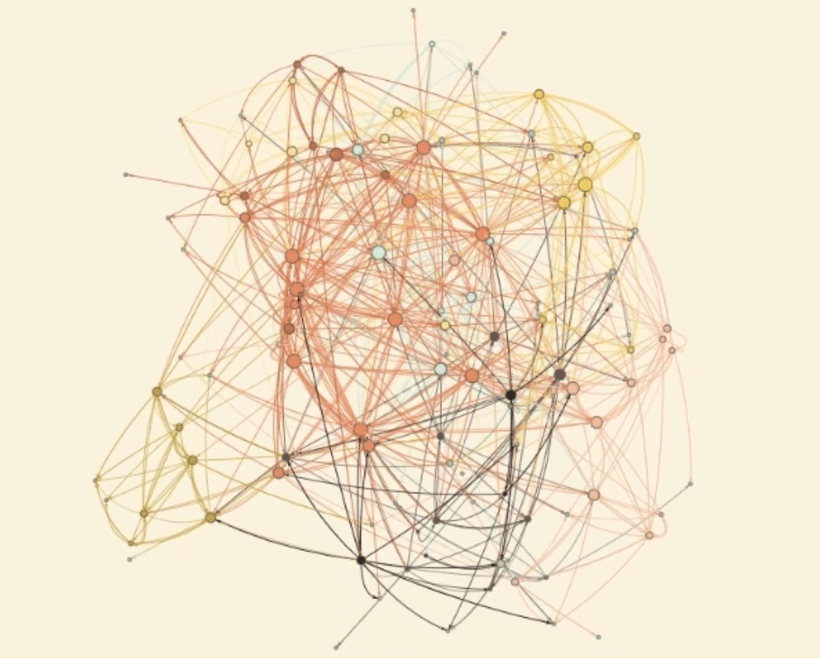
What can an organizational network actually tell you?
-
A lot of emails between two people does not mean they have a good relationship. Sometimes it means the opposite.

A lot of emails between two people does not mean they have a good relationship. Sometimes it means the opposite. Okay, you’ve realized that good relationships are important if collaboration within and between your groups is going to work as well as possible. And communication is, of course, an important part of good relationships. Does…
-
How can you understand the strength of relationships without reading people’s emails?

How can you understand the strength of relationships without reading people’s emails? If relationships between people are as important as I claim , we should try to understand what they look like. But how do we do that? One way is to analyze digital traces. Email, Teams, Slack and meeting bookings can provide huge amounts…
-
The meeting starts long before you walk into the room

The meeting starts long before you walk into the room When you walk into a meeting, you’re not starting from zero. You already have a picture of the people around the table. Who you trust. Who you usually agree with. Whose ideas you tend to question. Who you think is wise, difficult, creative or complicated.…
-
Relationships don’t show up on the income statement. Their effects do.

Relationships don’t show up on the income statement. Their effects do. It’s easy to talk about relationships, group dynamics and psychological safety as “soft issues.” But what happens if we follow the chain all the way through? If people have relationships that allow them to trust each other, ask for help, share information and challenge…
-
A network map changes nothing. What matters is what you do with the knowledge.

A network map changes nothing. What matters is what you do with the knowledge. Okay, you’ve just been given a picture of what the networks in your organization actually look like. Could this be roughly how you’re thinking? “Overall, it looks pretty good. Finance sticks together, but that’s only natural. The development teams are based…
-
ORI vs Organizational Network Analysis: what’s the difference?

ORI vs Organizational Network Analysis: what’s the difference? Organizational Network Analysis, ONA, helps us understand how people are actually connected in an organization. Who collaborates with whom? Where are the strong networks? Where do silos emerge? Which people connect different parts of the organization? That is valuable knowledge. But Organizational Relationship Intelligence, ORI, actually extends…
-
Why do we leave relationships to chance?

We measure finances, customers, processes and productivity. Why do we leave relationships to chance? Every organization exists to achieve something. For a company, that may mean profitability and growth.For the public sector, it is about providing good public services within the limits of available resources. But the principle is the same: we want to know…
-
What is Organizational Relationship Intelligence?

What is Organizational Relationship Intelligence? We spend a lot of time and money on culture, engagement, team development and psychological safety. And there are good reasons for that. How people function together affects our ability to collaborate, solve problems, develop ideas and actually get the work done. That’s why organizations invest in things like inspirational…
-
Companies know more about their cutomers than their employees

Most companies know more about their customer relationships than they do about the relationships between their own employees. CRM. Customer intelligence. Relationship intelligence. There are plenty of solutions designed to help companies understand their customers, share knowledge across the sales organization and find the right paths to that sought-after sale. We map the customer journey…